Kernel Neurotech
Case Study: BCI, Data Visualization, and the Future of Cognitive Insight
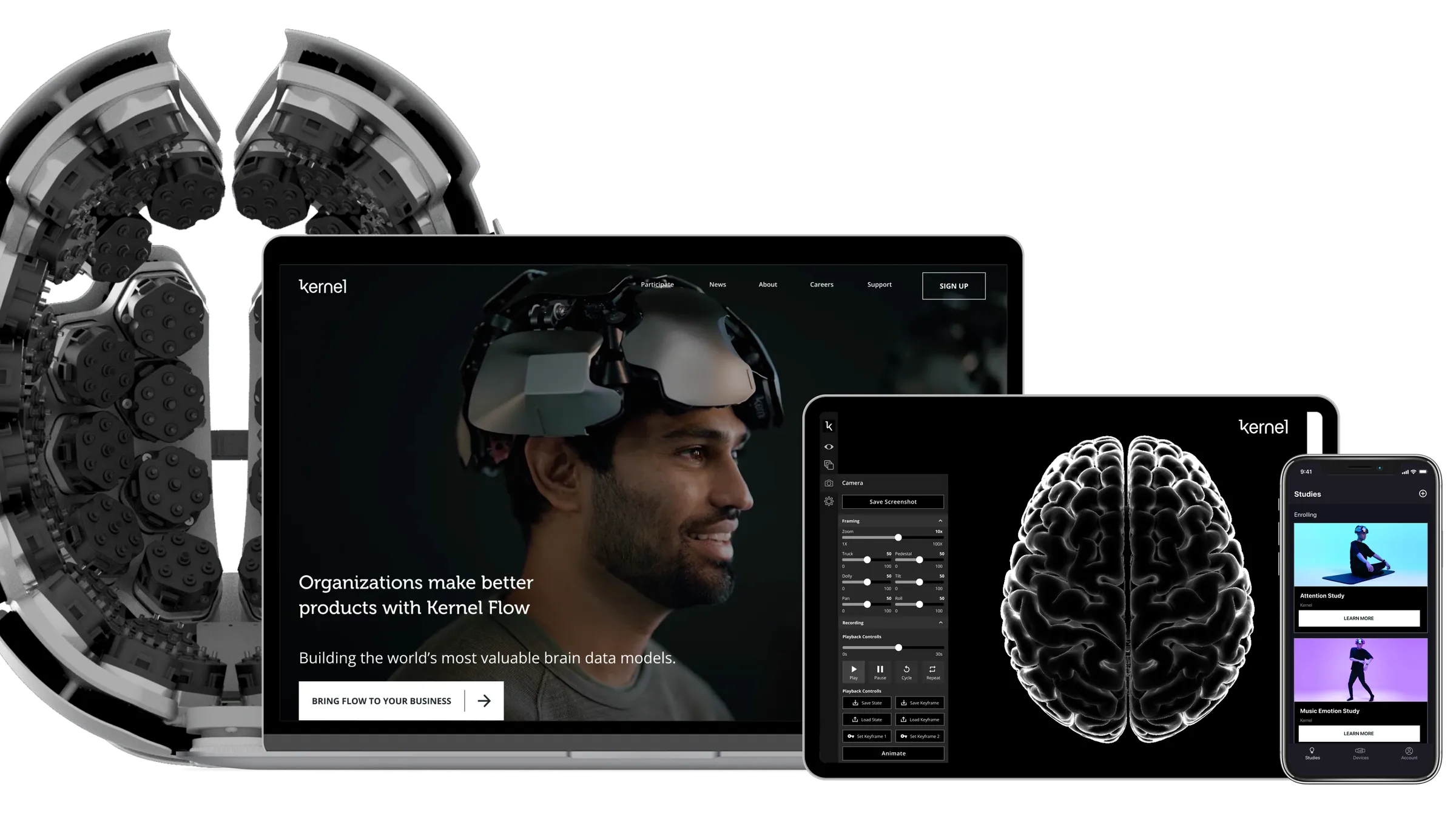
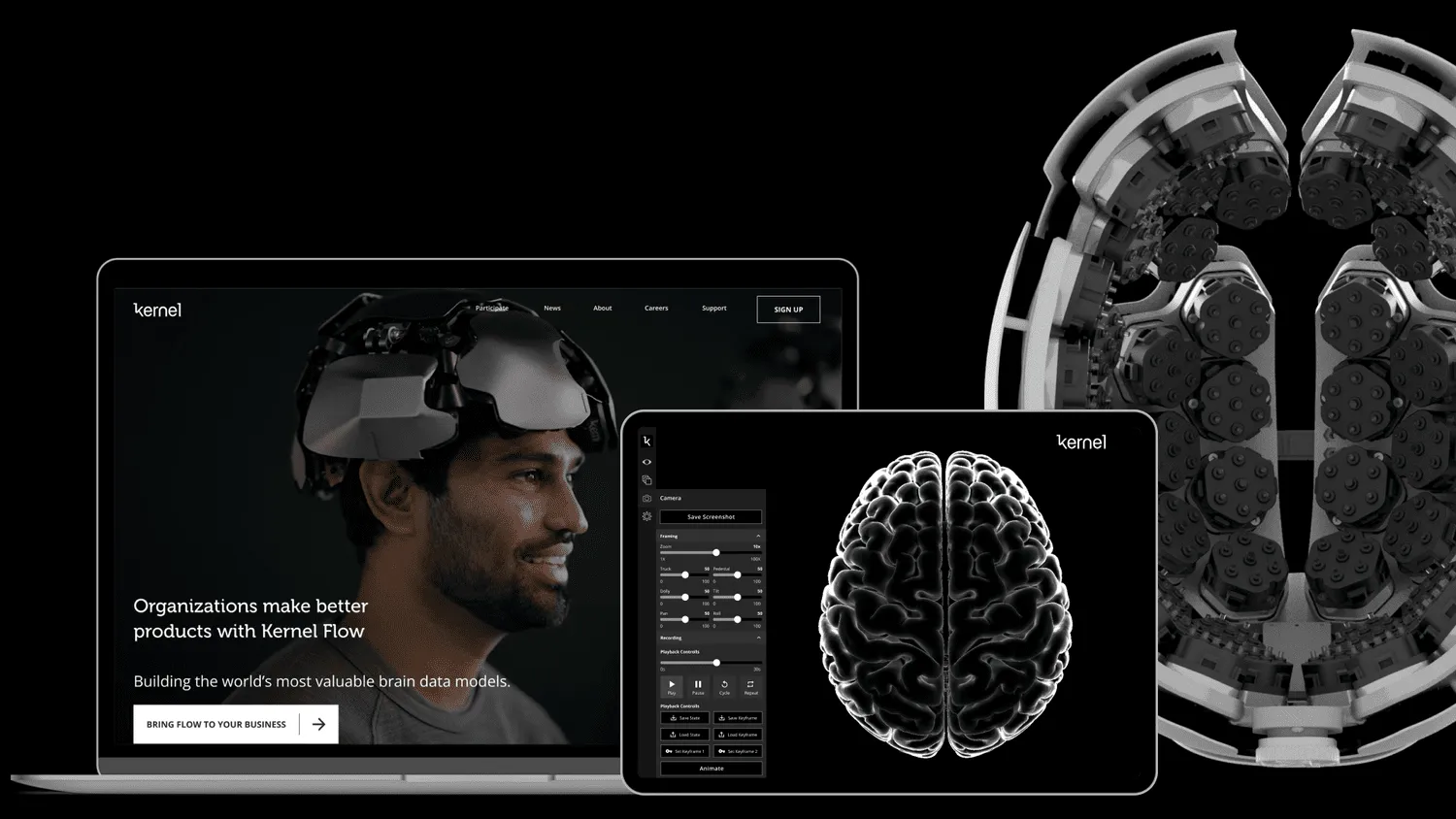
At Kernel, I worked at the intersection of neuroscience, product design, and cutting-edge hardware—helping turn raw brain data into usable, interpretable tools. Our mission was ambitious: make cognition visible and actionable.
My work spanned multiple touchpoints across the platform, from study participant onboarding to real-time cortical visualizations and researcher dashboards. The goal was to make complex neural signals legible, interactive, and insightful—whether for a neuroscientist in the lab or a user experiencing their brain for the first time.
MindsEye: Visualizing Brain Activity Across Space and Time
Purpose
To give researchers access to rich, time-based visualizations of cortical activity captured by Kernel Flow, a non-invasive optical brain imaging headset.
Contributions
-
Designed the MindsEye interface, enabling researchers to explore hemodynamic data across brain regions and timeframes.
-
Developed tools to view time-series heatmaps, composite activation states, and side-by-side comparisons between sessions or participant groups.
-
Created workflows for filtering by experiment type—such as music, meditation, alcohol studies, and memory recall—and toggling between real-time and post-session views.
-
Collaborated closely with neuroscientists and engineers to ensure the visualizations reflected accurate data while remaining accessible and intuitive. Impact
-
Enabled researchers to visualize shifts in attention, emotional resonance, and engagement.
-
Balanced scientific integrity with UX clarity, leveraging intuitive overlays, motion design, and color theory to reveal underlying patterns.
Participant Portal: Streamlining Study Enrollment and Onboarding
Purpose
To design a smooth, transparent experience for participants enrolling in neuroscience studies.
Contributions
-
Built a user portal for sign-up, consent, eligibility screening, scheduling, and reminders.
-
Emphasized transparency and accessibility in all flows, ensuring participants clearly understood the study purpose and their rights.
-
Integrated logistical support: transportation details, compensation tracking, and session reminders.
-
Created pathways for study coordinators to manage incoming participants and fill sessions based on real-time availability. Impact
-
Increased participant retention through thoughtful onboarding and clear expectations.
-
Improved study diversity by lowering friction in the enrollment process.
-
Ensured legal and ethical compliance through intuitive digital consent flows.
Study Management Dashboard: Internal Tools for Researchers and Coordinators
Purpose
To provide internal teams with real-time visibility into study progress, device data, and participant compliance.
Contributions
-
Designed dashboards to monitor session progress, device health, study parameters, and environmental conditions.
-
Created interfaces for filtering sessions by date, protocol, participant type, and experimental condition.
-
Integrated export tools for research teams to easily extract data summaries or visualize trends over time.
-
Balanced complexity with clarity, enabling technical users to drill into data without compromising on usability. Impact
-
Improved cross-functional collaboration between hardware, research, and operations teams.
-
Supported longitudinal studies with tools for tracking participant sessions over weeks or months.
-
Provided a flexible foundation for future integrations with analytics and third-party tools.
Reflections
Working at Kernel required both scientific empathy and design precision. The tools I designed had to respect the seriousness of neuroscience while remaining approachable, elegant, and human. This wasn’t just product design—it was cognitive cartography.
My time at Kernel helped refine how I think about data as experience, tools as translation, and the brain as interface. It’s one of the most rewarding design challenges I’ve ever taken on.