Holovest
A wearable dance game: a disc of light at the chest, a custom sensor board, and four games for a crowd.
Between May 2019 and April 2020 Robert Lawson and I built the Holovest: a disc of light worn at the sternum that turned a party into a game. We incorporated Us Robots Inc. around it, designed a custom board, wore the prototypes in public, and wrote the games. Then Covid removed every event it was built for, and we wound the company down. This page is the record of what was made and what was learned. It is a product that never shipped, written up honestly.
The idea
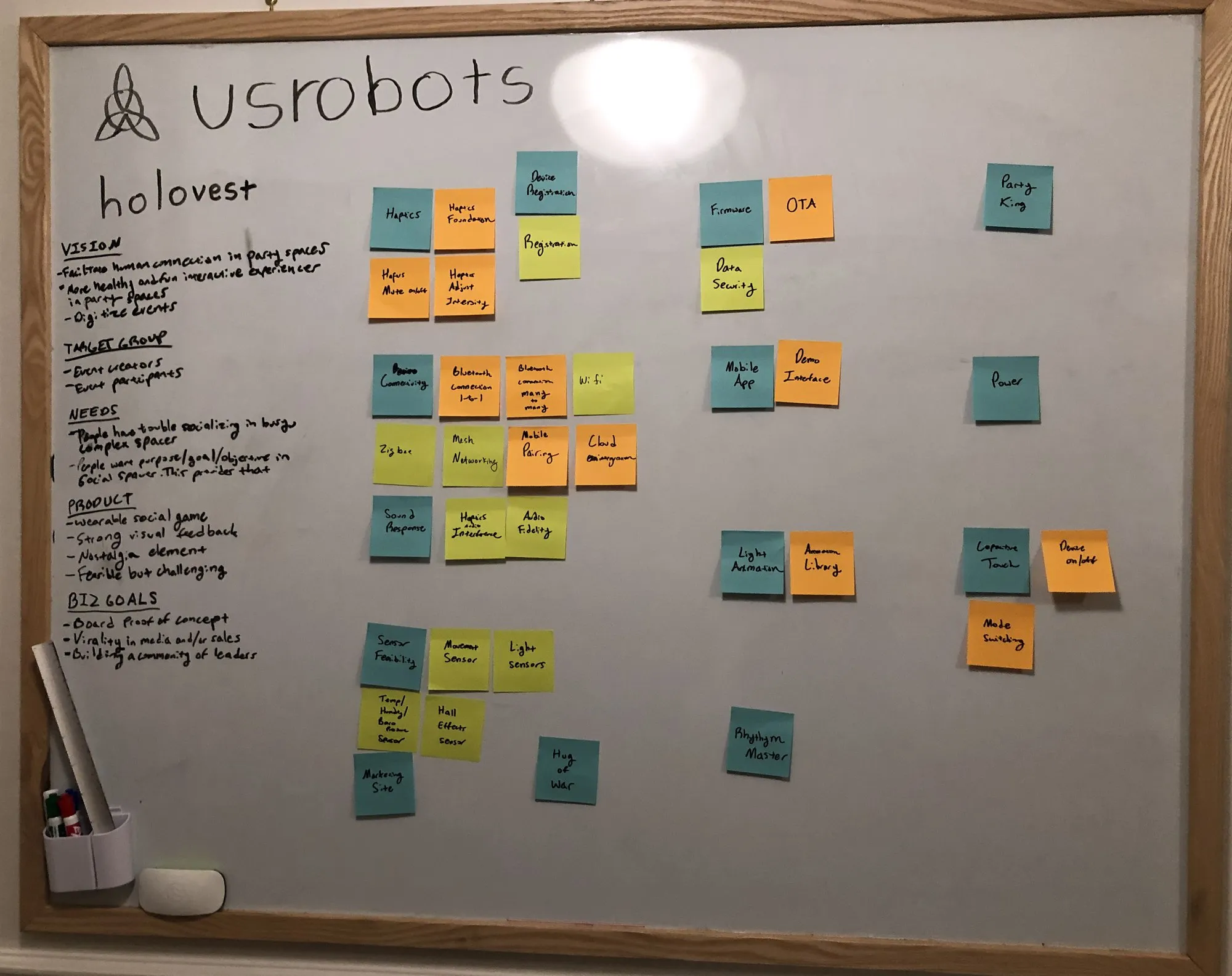
The whiteboard from our October 2019 brainstorm says it in four lines. People have trouble socializing in busy, complex spaces. People want a purpose, goal or objective when they are in one. The product is a wearable social game with strong visual feedback, a nostalgia element, and a scope that is feasible but challenging. The business goals were a board that proves the concept, virality in media or sales, and a community of leaders.
The sharper version came later, in the game specification: how do we make people dance like they don’t have a choice, and how do we make technology physical? Underneath both was a conviction that the phone was the thing to beat. The spec called restricting phone use “pivotal to the success of the product.” The vest was meant to be what you reached for in a crowd instead of a screen.
The vest
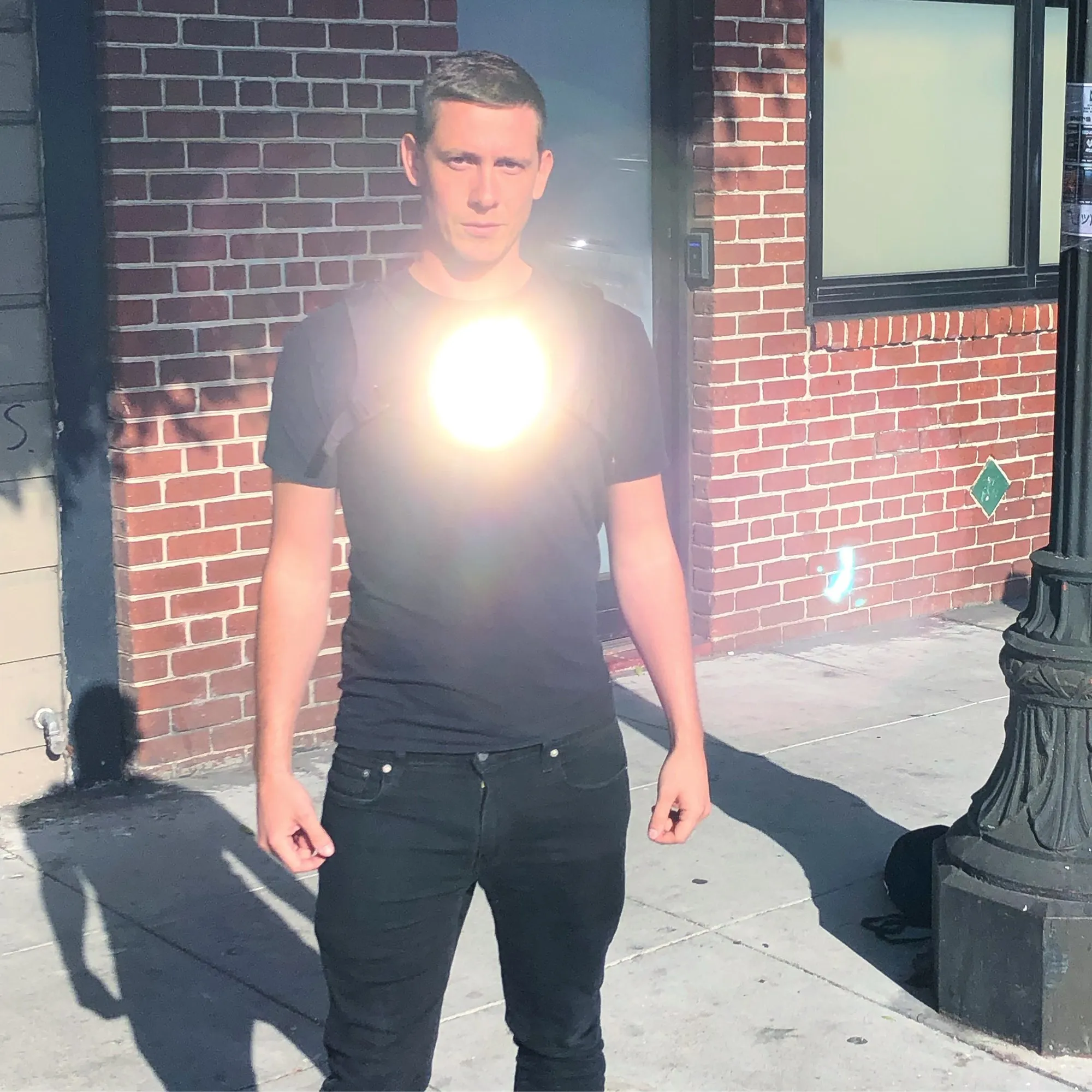
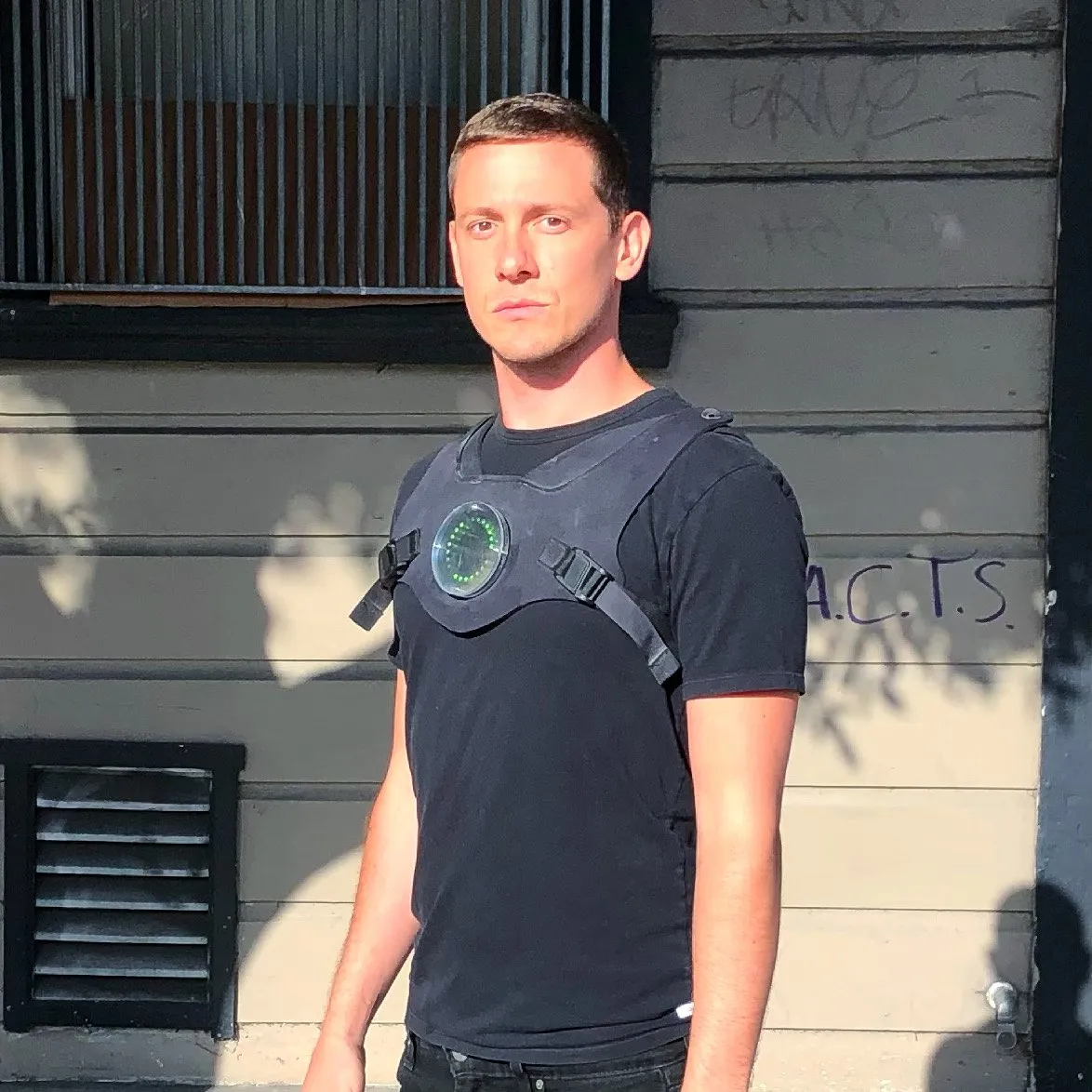
The first generation, cut in May and June 2019, was a laser-cut light vest with a clear plate, a mirror plate and a 3D-printed lens spiral over an off-the-shelf LED ring and microcontroller. By the autumn it was a harness holding a disc at the chest, and that is what I wore out into San Francisco.
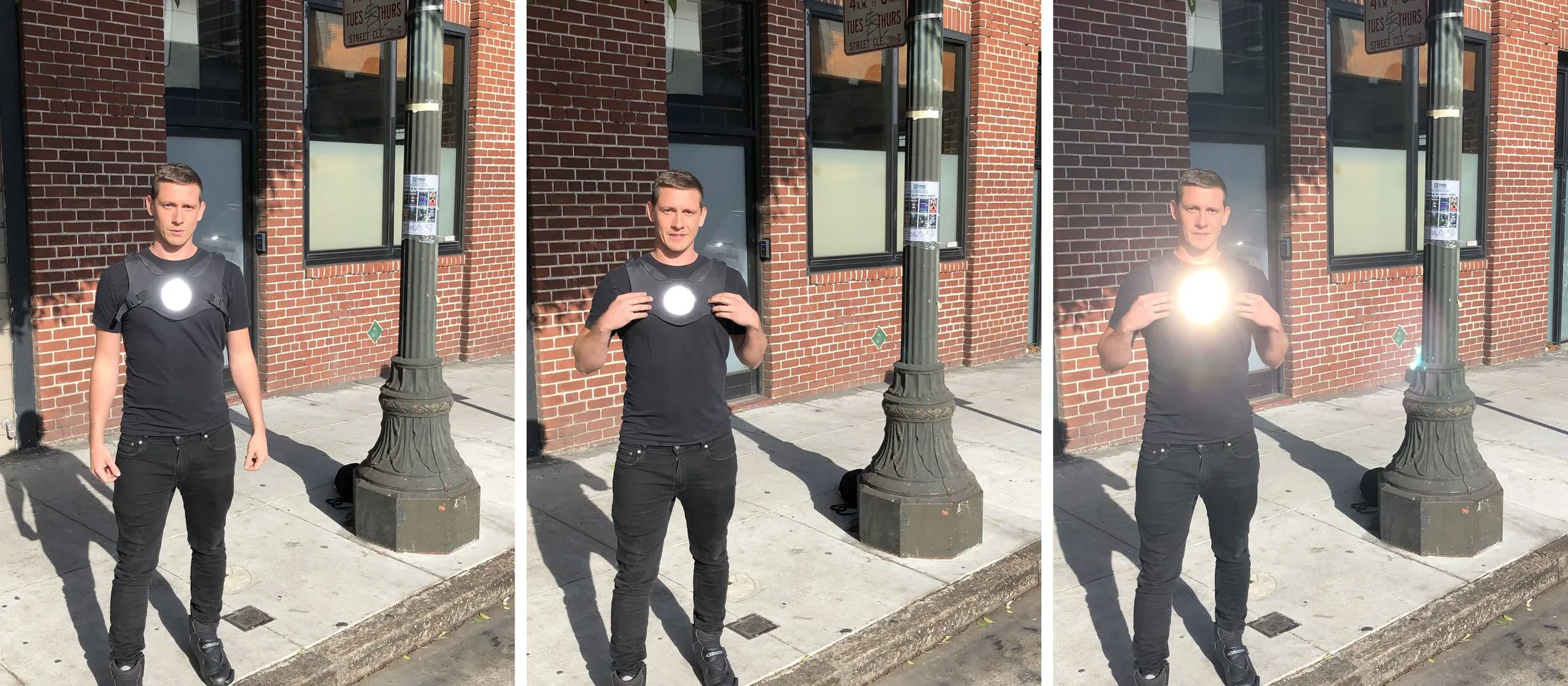
The enclosure that followed in March 2020 was a 90 mm disc, 13 to 16 mm thick: back plate, printed circuit board, clear acrylic, then a one-way mirror in front, so that the ring of LEDs reads as a sphere of light rather than twenty-four points. Bolts through the housing doubled as capacitive touch contacts. A neoprene mount held it to the body. A fashion designer, Amyel Oliveros, was brought in to design proper bodywear around it.
The Mandala Board
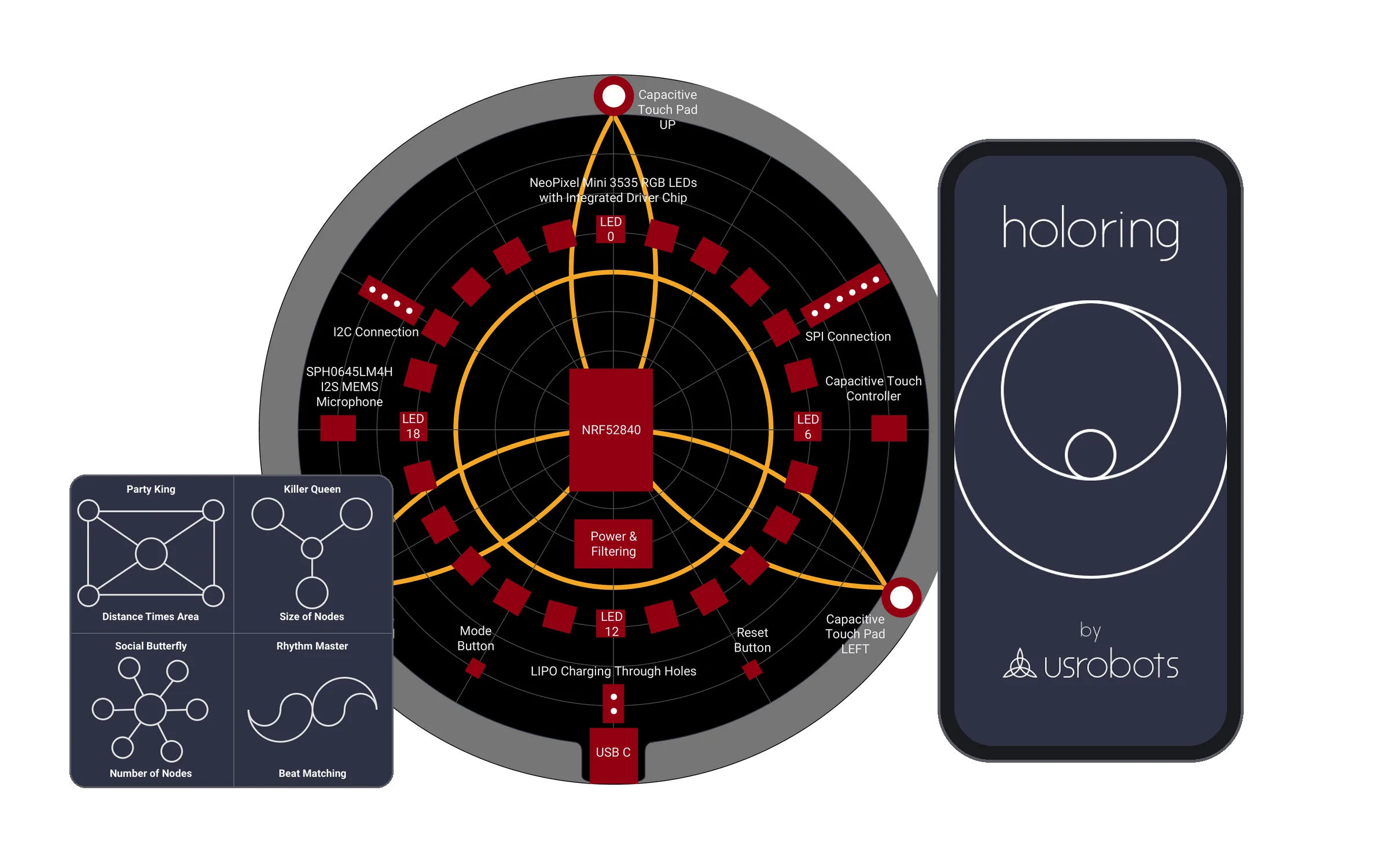
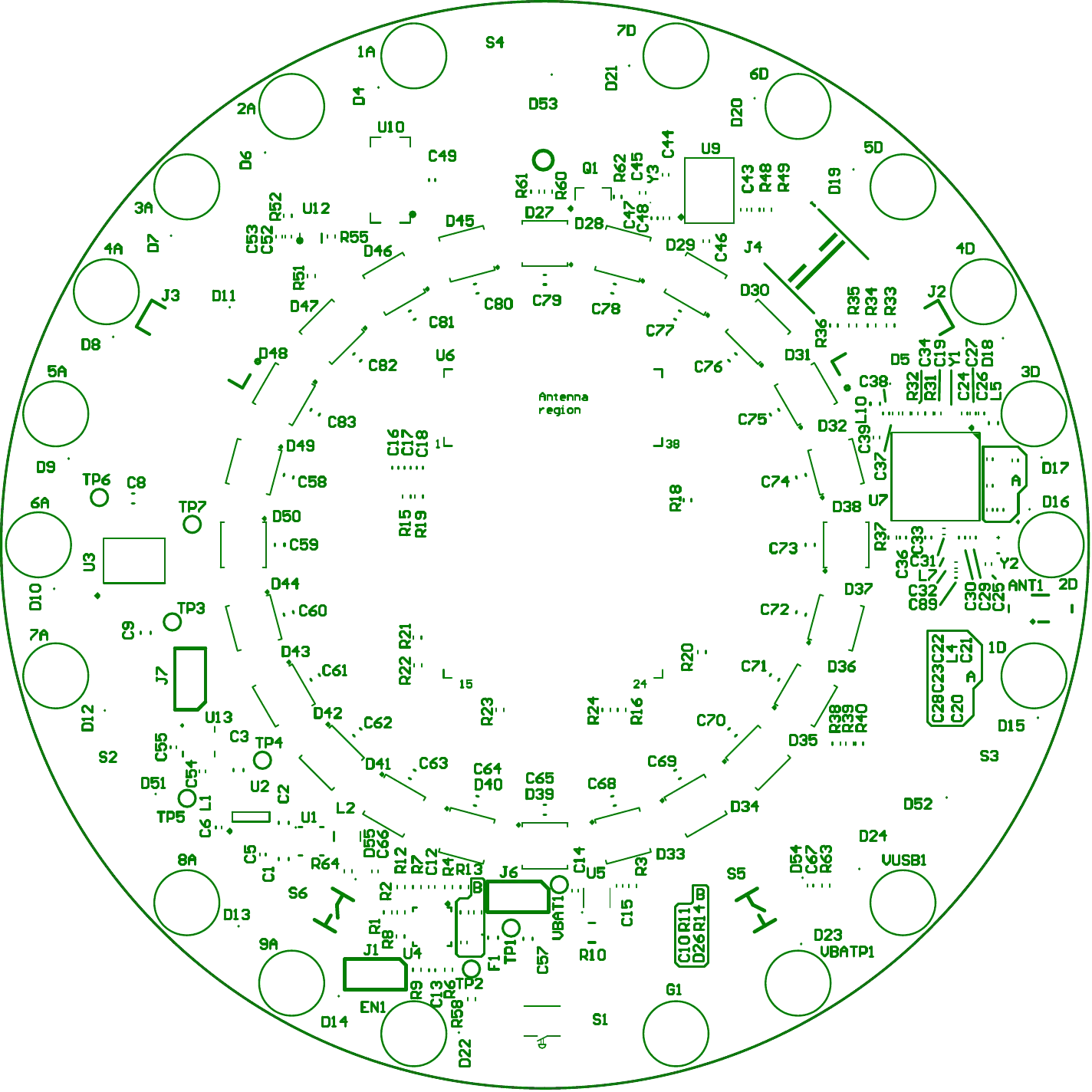
The custom board is the part of the project I am proudest of. In June 2019 it was a wireframe: a microcontroller in the middle, a 24-LED ring around it, and sensors at the edge. By July it was a design document, by September a four-layer Altium layout produced with contract engineers at Droid Technologies, and on 17 September 2019 ten boards went to fabrication.
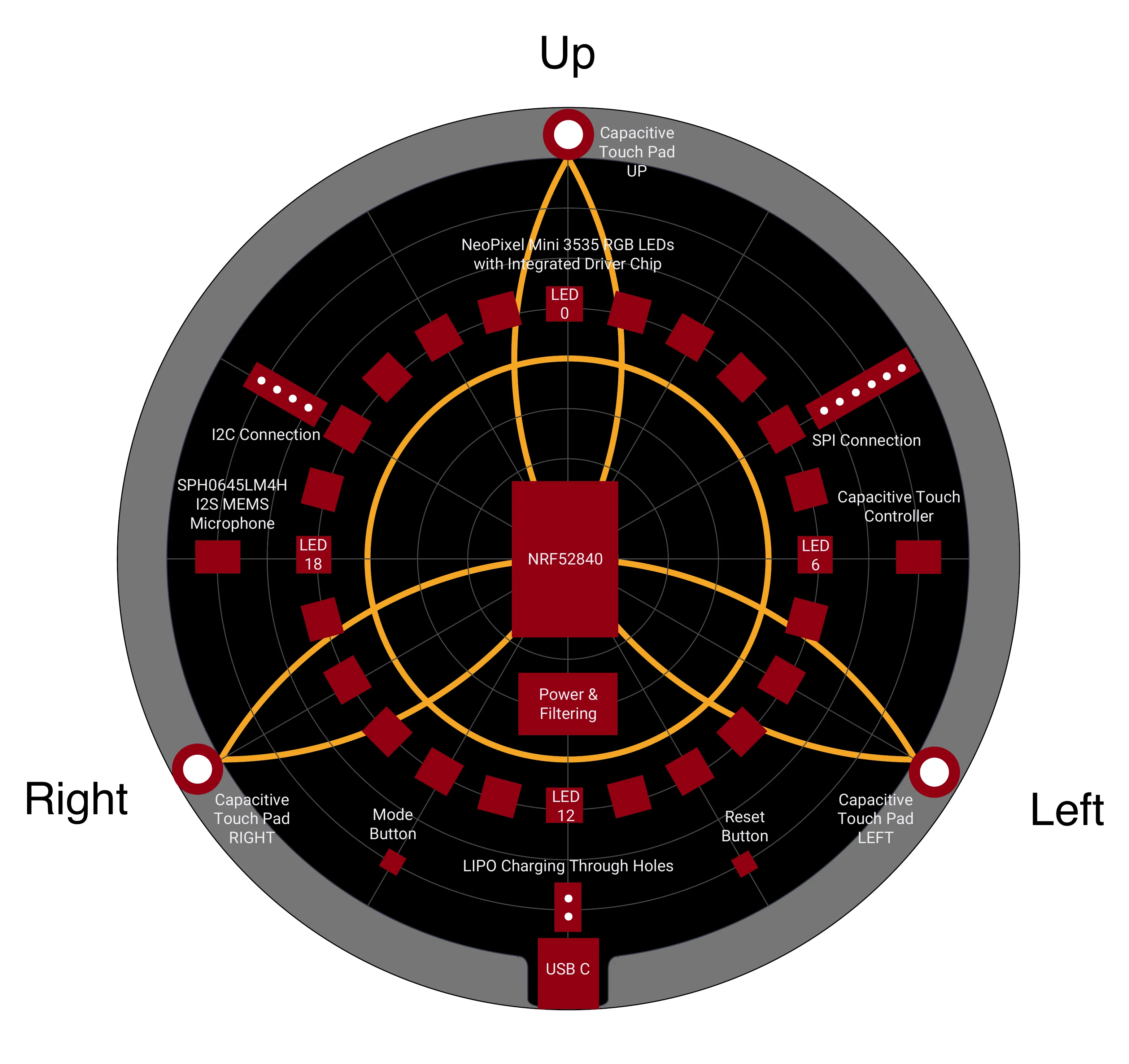
What it carries: an nRF52840 for Bluetooth and USB and an ESP32 for Wi-Fi and audio, a BNO055 nine-axis orientation sensor, an I2S microphone, ambient light, UV and temperature-humidity-pressure sensors, a haptic driver and disc motor, three capacitive touch pads, a USB-C port and a 900 mAh lithium-polymer cell. Everything a game could sense or do, on one 90 mm disc. The first run of ten bare four-layer boards cost $399 to fabricate, plus a stencil; assembly and parts were quoted separately through Tempo Automation.
The games
The games are where the sensors become behaviour. Each one rewards something we wanted more of in a room.
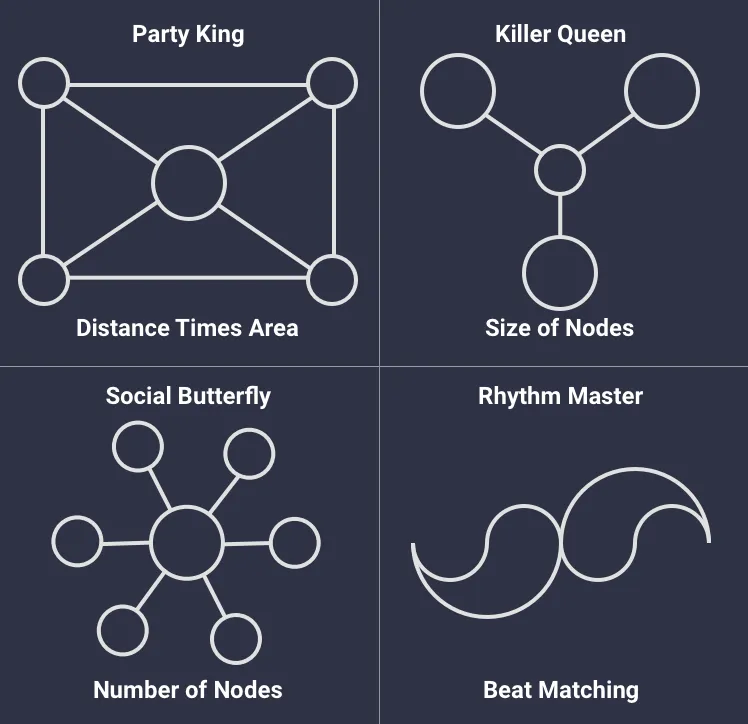
Party King scores how far you travel and how much new ground you cover, from the orientation sensor. It rewards exploring the space. Social Butterfly uses radio signal strength and a double opt-in: when two wearers agree, both discs pulse a shared heartbeat and each earns a point. It rewards meeting someone. Rhythm Master listens to the room through the microphone and scores how well you keep the beat; as more of the crowd syncs, the lights across the room unify into one field. It rewards dancing together. Killer Queen gives points for time spent near beacons in exclusive areas or near designated people. It rewards status, and it is the one I would cut today.
Going to market
The launch plan sold the Holovest two ways at once. To wearers it was fashion and connection: cool photos, custom branding, selectable modes, syncing to the DJ, huggability. To venues and DJs it was insight: attendee engagement, movement, energy, time spent, crowd control, return on investment. Festivals were the priority channel, with ephemeral shops, Etsy and retreat organizations behind them. Revenue ideas ran from direct sales to event rentals, in-app purchases and selling the analytics.
The autumn of 2019 was spent on exactly the things a launch needs: board testing, new vests, a photoshoot that kept slipping, market-research interviews, and introductions to people who had run silent-disco companies and hardware teams. User testing was written up as three questions. Which form factor fits across gender and size? Which application do people respond to, the game, the audio-visual show or the social layer? What will they pay?
What stopped it
By April 2020 we had a finished board design, worn prototypes, a brand and a game specification. We did not have firmware for the games, a price, or a single test cohort. The product requirements document and the launch plan were still headings. Then the events closed. Burning Man, Folsom, Pride, the warehouse parties: the entire distribution model depended on crowds in close contact, and for the next year there were none. We dissolved Us Robots properly and archived the work.
What I took from it
Decide who pays before the board is laid out. A dancer and a venue would have led to two different boards, and we designed for both. Write the requirements first; the October outline would have taken a day to fill and would have forced that choice. Treat firmware as the product: for a sensor game the board is a commodity and the behaviour is the invention, and we staffed it the other way round. And test the thesis cheaply. Whether a light at the chest makes strangers talk to each other could have been learned with a Feather and a NeoPixel ring at one party, months before custom silicon.
The instinct that was right is the one the photographs show. Strap it to yourself and go outside. Every piece of interest the project ever generated came from being worn.
Where it stands
Archived. The enclosure CAD, the full Altium project, the design documents, the game specification and the business files are intact, along with the boards from the first run, which were under test through December 2019. The games were never written. If the idea is revisited it will be as a small run for one event, with a price and a cohort, before any new hardware.