Turing Vessel and Cachepot
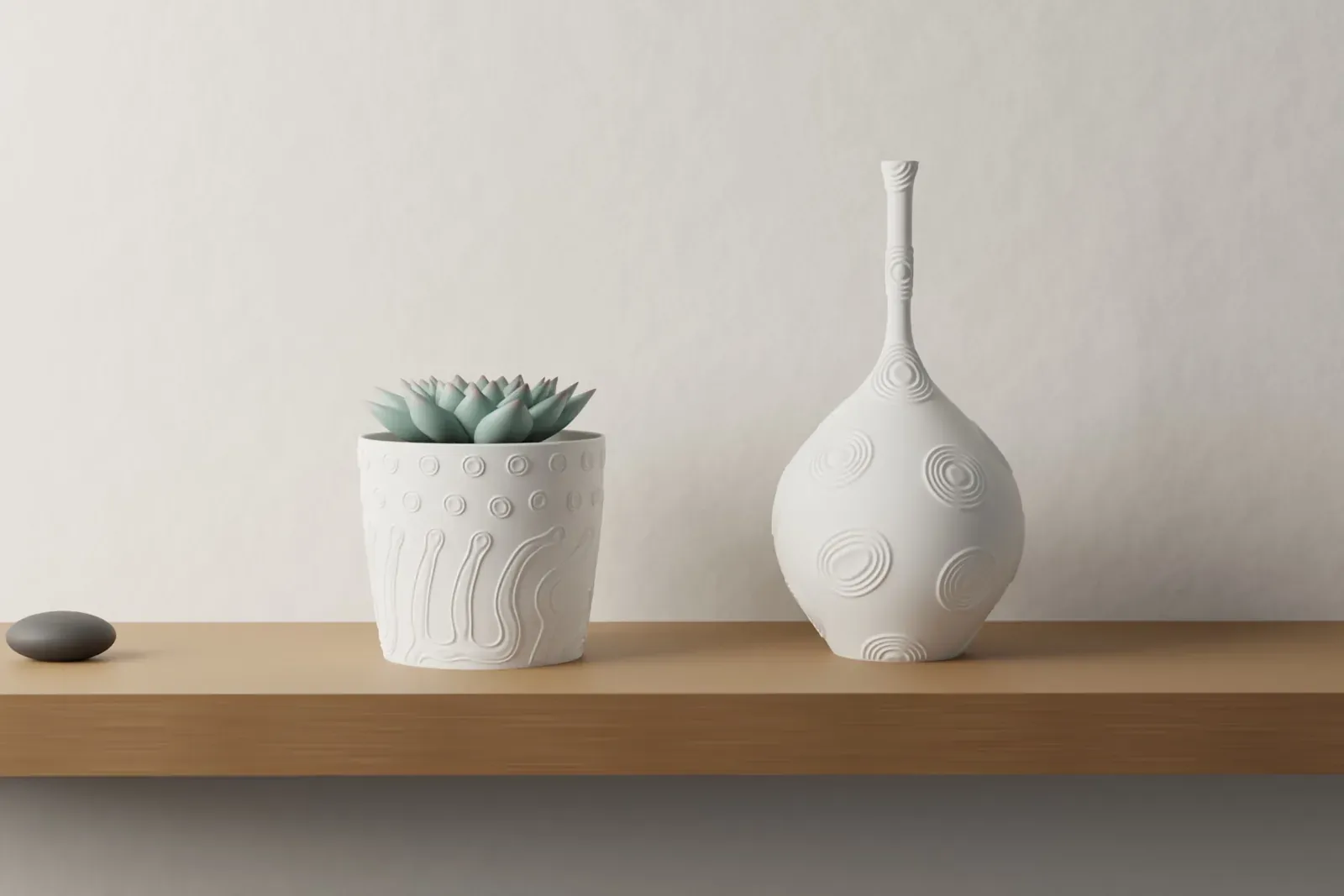
In November 2026 I went back to the question from Light in Resin: let a rule grow the surface of an object, print it, and see whether it holds. This time the rule is a Turing pattern, the reaction-diffusion process that makes spots and stripes on animals, simulated directly on the shape of each piece.
The vessel
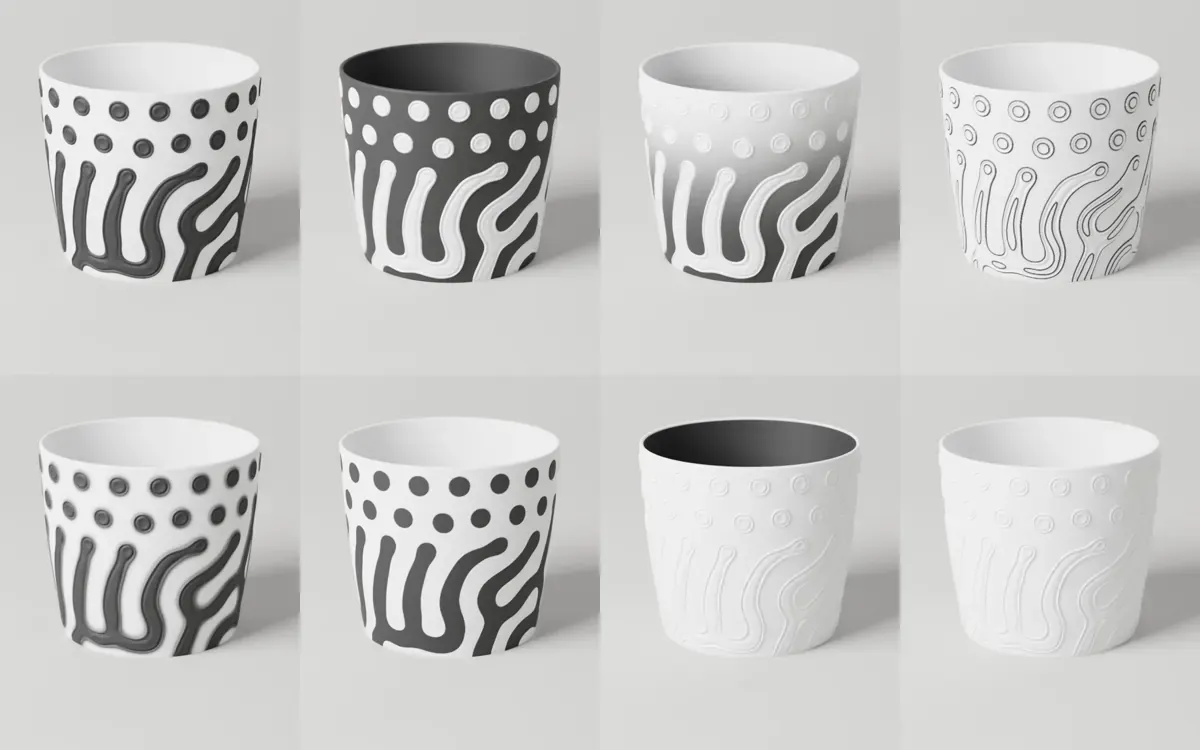
The vessel is 260 millimetres tall, with a round belly and a long, narrow neck. One simulation, run on this exact vase shape, sets spots across the belly and rings around the neck, with a spacing of 46 millimetres. In one colour of nylon the pattern has to be relief, so I compared four textures and chose contour rings: each spot is five raised rings that follow the simulated values. The wall is 2.5 millimetres, smooth inside, with the rings standing 0.9 millimetres proud.

The cachepot
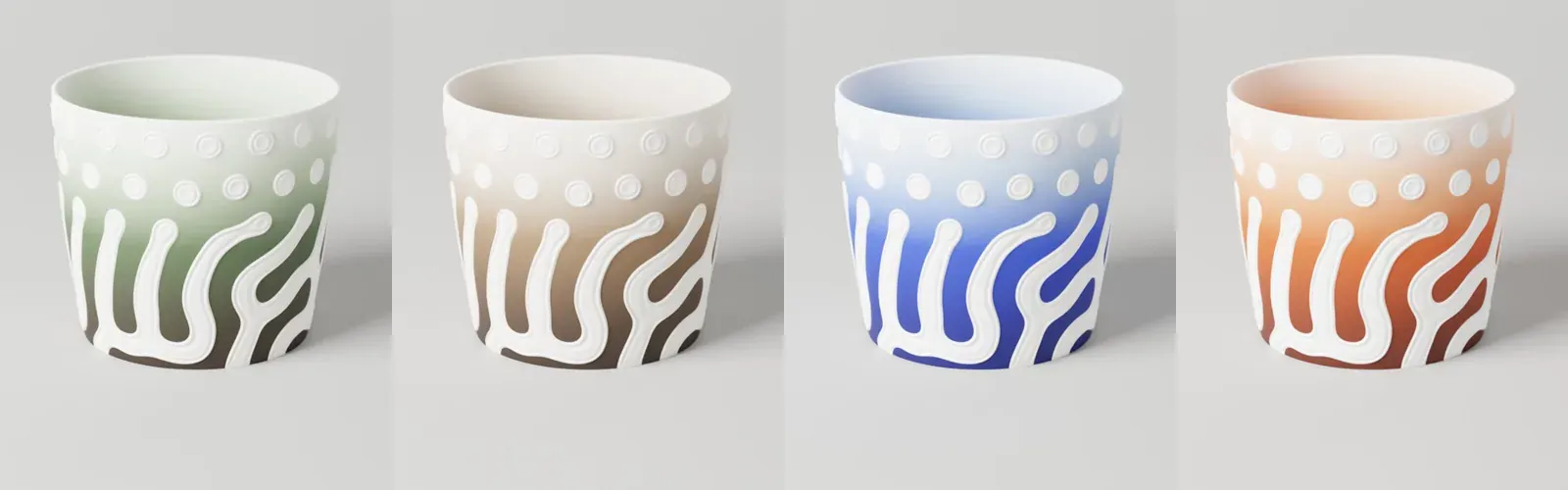
The cachepot is a cover for a small plant in its nursery pot, 130 millimetres across. Its pattern changes from foot to rim. Near the base the simulation makes a branching maze, like roots, and toward the rim it breaks into spots, like leaves. Each shape carries two contour rings, to match the vessel. For full-colour printing it has four colourways that run dark at the foot to light at the rim.
Both are print files, closed and checked, sized for white nylon printed by laser sintering. Neither has been printed yet.